What Skipping Pressure Washing Maintenance Really Costs You

Deferred exterior cleaning does more than make a property look tired. It quietly shortens the life of your paint, your sealant, and your roof, and it raises your risk of a slip-and-fall claim on a walkway nobody got around to scheduling. Think of pressure washing maintenance as asset protection, not cosmetic. Skipping it usually costs more than the invoice you were trying to avoid.
Why algae and mildew do more than make your building look dirty
Algae, moss, mildew, and lichen aren’t just dirt sitting on the surface. They’re living organisms that hold moisture against whatever they’re growing on, and that trapped moisture is what can cause damage. The Asphalt Roofing Manufacturers Association says Gloeocapsa magma is the algae species that most often leaves dark streaks on roofs. It travels through the air and settles wherever it finds moisture and shade. Purdue Extension’s research on exterior coatings backs this up by saying that moisture is the single biggest cause of premature paint failure on wood. It gets under the paint film and pushes it apart from underneath.
There’s a health angle too, once mold enters the picture. The CDC notes mold exposure can trigger respiratory symptoms and make asthma worse. The real fix isn’t just cleaning the surface. It’s addressing the moisture underneath. If tenants, customers, or the public walk past a shaded stairwell or a north-facing entry column every day, this becomes a liability question as much as a maintenance one.
The slip-and-fall risk sitting right outside your door
Moss and algae don’t stay on the roof. The same moisture and shade that discolor a north-facing wall also grow a slick film on concrete walkways, loading dock ramps, and pool decks, usually in the exact spots where people walk the most. OSHA’s walking-working surfaces standard exists for a reason: falls are among the leading causes of serious workplace injury. OSHA estimates its current rule prevents roughly 29 fatalities and 5,842 lost-workday injuries every year across covered industries.
This issue can affect more than just your workplace. A tenant, a delivery driver, or a visitor who slips on an algae-slick sidewalk or a mildewed loading ramp creates the same kind of claim. A cleaning schedule helps you defend against that. Regular parking lot and sidewalk washing is one of the more affordable ways to manage that risk, especially compared to what a single claim costs to settle or litigate.
What deferred cleaning does to your paint, sealant, and roof
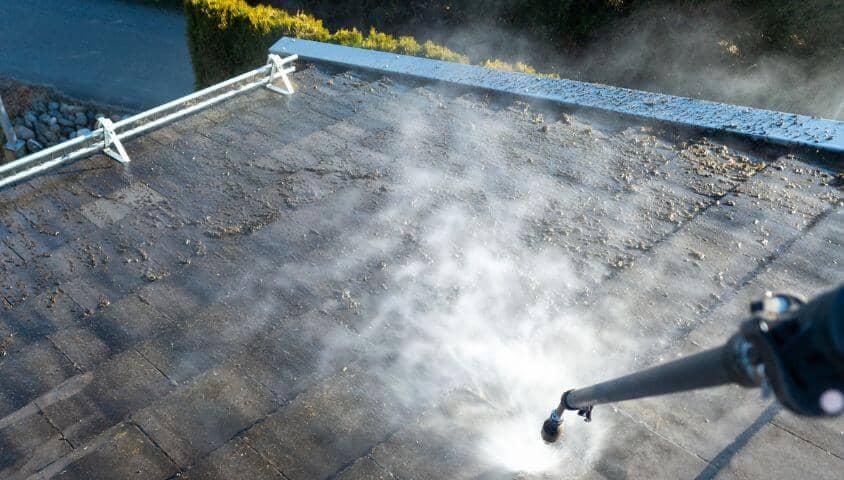
The National Roofing Contractors Association puts it best: maintenance is the single most important factor, after proper installation, in how long a roof lasts and what it costs. NRCA also points out that maintenance is often the most neglected part of a roof program. A roof that stays current on roof soft washing ages more slowly than one left to grow algae and hold moisture, which happens quietly and is exactly what makes deferred maintenance so expensive. Nobody notices a roof aging six months faster than it should.
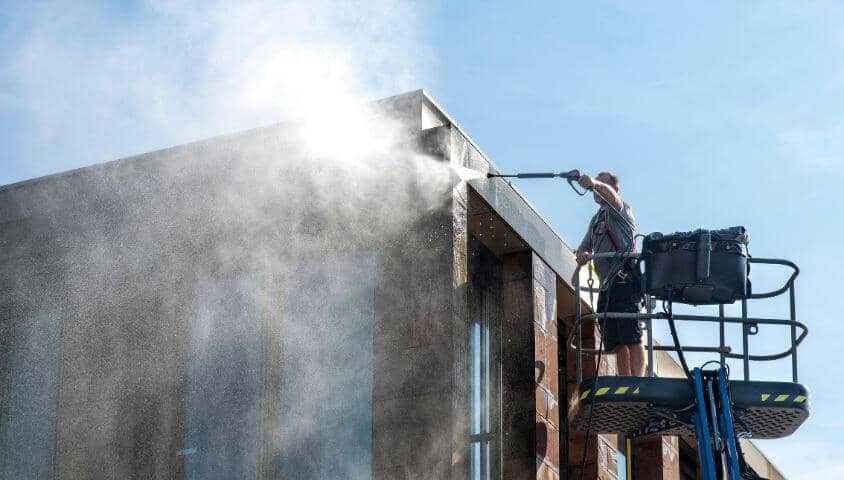
The same logic applies below the roofline. Paint, EIFS, stucco, and siding all depend on a sealed, moisture-resistant surface to do their job. Once organic growth breaks that seal or holds water against it long enough, your paint and sealant fail earlier than the manufacturer ever intended. That means your next recoat or resealing project lands on the budget sooner than planned. A vinyl siding and fence washing program costs a lot less than repainting or resealing a building ahead of schedule.
Building a pressure washing maintenance schedule that fits your budget
There’s no single right answer here, and any vendor who gives you one number for every building in your portfolio is guessing. Frequency depends on climate, shade, tree cover, and how the building gets used. Here’s a starting point for planning:
- Building exteriors and siding in humid, shaded climates: Every 12 to 18 months. Drier climates can often stretch 18 to 24 months.
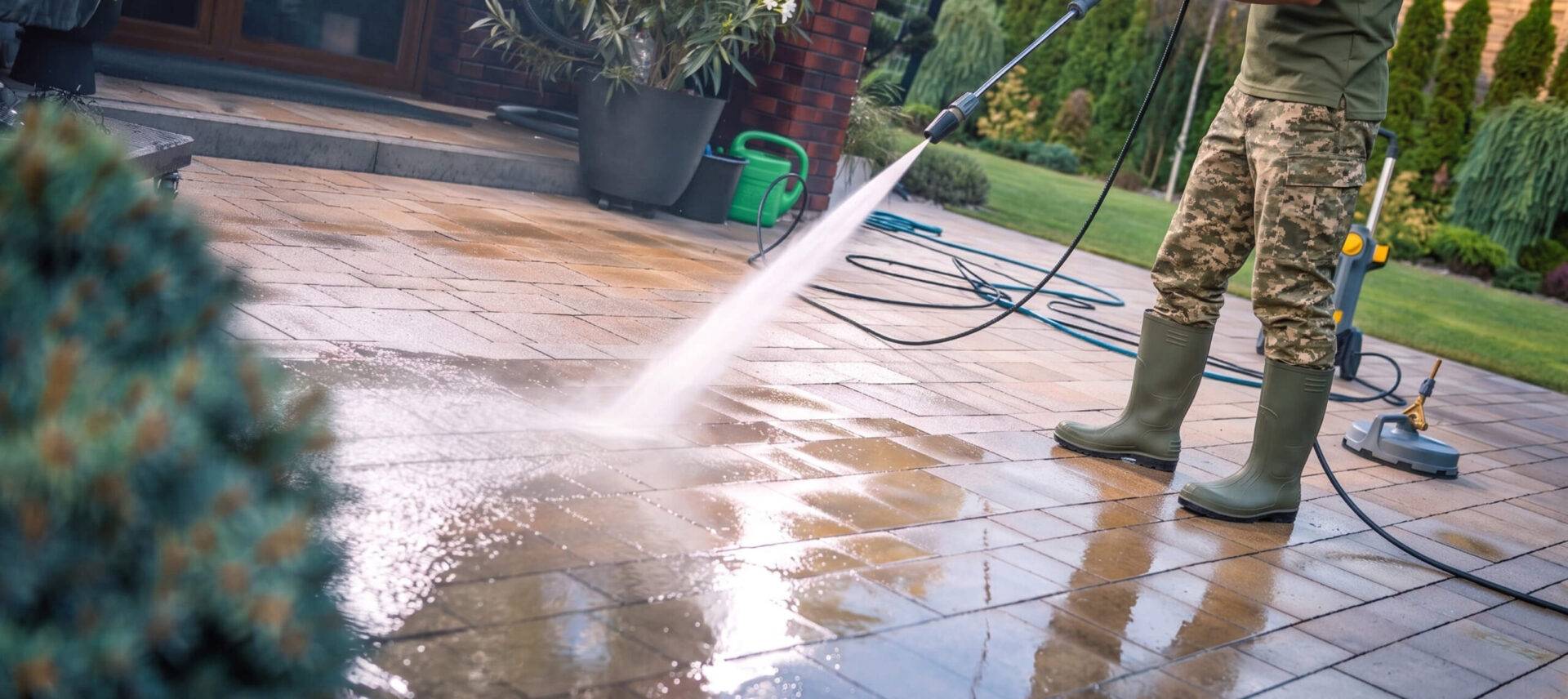
- Concrete sidewalks, entries, and walkways: Every 3 to 6 months in humid markets where algae grows back fast, twice a year almost everywhere else.
- Parking garage and structure cleaning: Once a year, more often if you’re coastal or high traffic, where salt and staining build up faster.
- Roof soft washing: Every 2 to 3 years, adjusted to your roofing manufacturer’s guidance.
- Fleet power washing and solar panel cleaning: On a recurring schedule tied to your routes or seasonal buildup, not a fixed date on the calendar.
Preventative maintenance saves you time by catching problems before roofs and siding need repair or replacement. Reactive maintenance almost always costs more. Applied to washing, that means building the frequency into next year’s budget instead of approving it as a surprise invoice after a tenant complains or an owner flags it.
Pricing for commercial jobs runs wide, anywhere from roughly $850 to $3,500 or more per visit, depending on scope and property size, according to a 2026 industry analysis. Treat that as a directional number, since your actual pricing depends on your property. The bigger point stands either way: a scheduled program is easier to budget for than a reactive one, and budget planning season is the right time to turn deferred cleaning into a line item instead of an emergency.
What to ask before you sign a vendor
Method matters more than price. High-pressure equipment can strip paint, force water behind siding, and damage roofing in ways that void a manufacturer’s warranty. ARMA’s own guidance on roof algae cleaning doesn’t leave much room for doubt: skip the power washer, skip the brush, skip the broom, and expect the surface to get slippery during cleaning. This is exactly why ARMA recommends hiring a professional. Soft washing and low pressure, combined with the right detergent and dwell time, get you the same result without the damage claim.
Ask any vendor bidding on your property a few simple questions. Can they confirm insurance coverage? Can they describe their wash method by surface type? Can they work around your tenants, deliveries, or business hours so the visit doesn’t create a complaint of its own? Then ask what happens to the wash water. The EPA’s guidance on outdoor washing operations is clear that wash water carrying detergent, oil residue, or debris shouldn’t run straight into a storm drain. A vendor without a runoff plan can leave you with a violation you had nothing to do with. A written scope, not a verbal estimate, is what belongs in your board packet or your capital plan.
If you manage more than one property, a single plan across every market that PROP WASH® serves makes scheduling simpler. National account coordination keeps your invoice and your schedule consistent from one location to the next.
PROP WASH® crews are insured, uniformed, and backed by a 100% satisfaction guarantee. Every PROP WASH® location is independently owned by an operator who’s accountable for the work on your property. Find a PROP WASH® near you to schedule a walk-through and get a written scope you can drop straight into next year’s budget.