Soft Washing vs. Pressure Washing vs. Power Washing: What’s the Difference?

Short answer: pressure washing uses high-pressure water with no heat. Power washing is the same delivery with heated water added. Soft washing uses low pressure and a cleaning solution that kills organic growth at the root instead of forcing it off the surface.
The three terms get used interchangeably, and the distinction matters, because the wrong method on the wrong surface doesn’t simply clean poorly. It causes damage you then pay to repair, which is why a professional picks the method from the surface rather than from the equipment on the truck.
Pressure washing: the water does the work
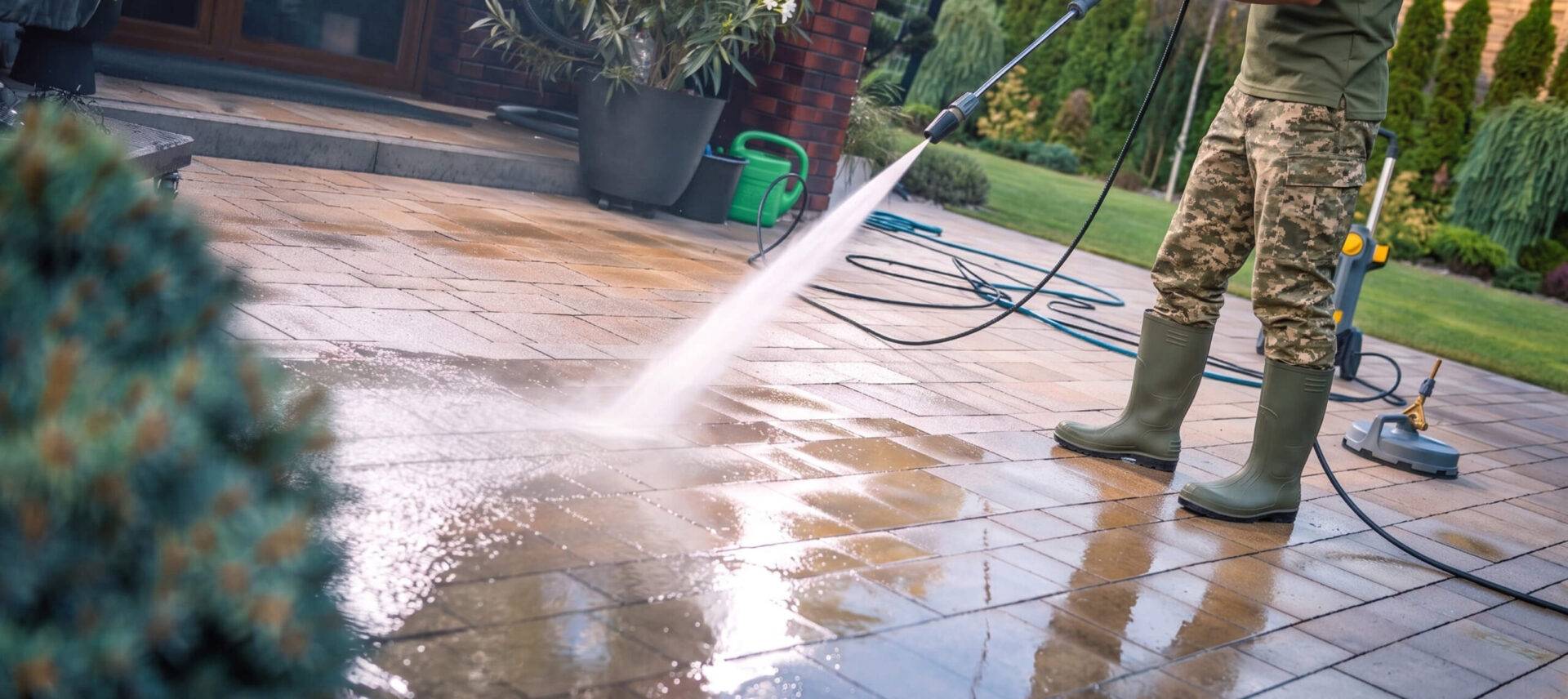
Pressure washing is unheated water delivered at high pressure. The cleaning comes from mechanical force, so it belongs on surfaces hard enough to take it: concrete sidewalks and drive lanes, parking structures, dumpster pads, unsealed masonry, and most hardscape.
It doesn’t belong on roofs, painted siding, stucco, EIFS, or aging wood. The Polymeric Exterior Products Association, the trade group for vinyl and polymeric siding, is direct about the risk: “Do not aim the stream upward, as this can force water behind the siding panels.” It also notes that “some siding manufacturers do not recommend power washing, while others have limits on the pressure (PSI) and cleaners.”
If you manage commercial property, pressure washing is the method most of your flatwork needs. Judgment matters most here, because the same pressure that cleans a drive lane will damage the wall behind it.
Power washing: heat does what water alone can’t
Power washing adds heated water to the same high-pressure delivery. Heated water changes what the wash can dissolve. Grease, oil, gum, tire marks, and road film release with heat in a way cold water can’t match at any pressure.
That makes it the right call for fleet vehicles, loading docks, drive-thru lanes, restaurant patios, and garage floors. It also produces wash water carrying everything it just removed, which is why runoff handling is part of the job. The EPA regulates that kind of discharge under its stormwater program, and local requirements vary by municipality. Ask any vendor how they contain and dispose of wash water, because a crew with the answer ready has done this before.
Soft washing: the chemistry does the work
Soft washing runs at pressure closer to a garden hose. The cleaning comes from a biodegradable detergent solution that is applied, allowed to dwell, then rinsed. Because it kills the organic growth rather than knocking the top layer off, the surface stays clean noticeably longer.
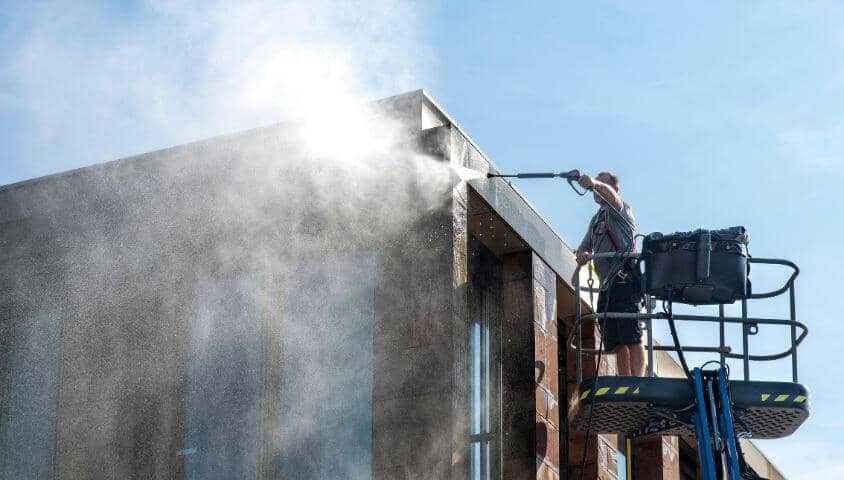
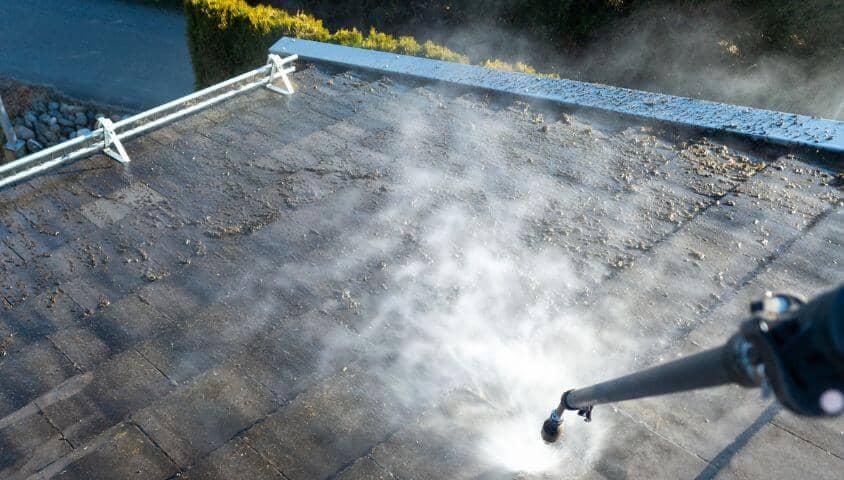
Soft washing is what roofs, painted and vinyl siding, stucco, screen enclosures, and wood fences need, along with anything else high pressure would ruin. The Asphalt Roofing Manufacturers Association could not be clearer about roofs: “Never use a pressure washer to clean an asphalt shingle roof as this will cause granule loss and very likely premature failure of the roof system.” ARMA’s own recommended method is to apply a cleaning solution, let it dwell for 15 to 20 minutes, and rinse with low-pressure water, which is soft washing described step by step.
Those dark streaks on a north-facing roof or a shaded wall are usually algae, mildew, moss, or lichen, not dirt. As the CDC notes, mold grows wherever there is moisture, which is why shade and humidity, not neglect, drive most of what you’re looking at.
Which method does your property need?
| Surface | Method | Why |
| Asphalt shingle or tile roof | Soft wash | Pressure removes granules and shortens roof life |
| Painted, vinyl, or stucco siding | Soft wash | Pressure can force water behind the panels |
| Concrete walks, drive lanes, dumpster pads | Pressure wash | Hard surface, mechanical force is appropriate |
| Fleet vehicles, loading docks, garage floors | Power wash | Heat releases grease, oil, and road film |
| Decks, fences, older wood | Soft wash or low pressure | High pressure raises the grain and etches the board |
| Solar panels | Deionized water rinse | Cleans without leaving mineral spotting |
Climate changes the answer as much as the surface does. In hot, humid markets, organic growth is the dominant problem and soft washing carries most of the work. In dry, dusty markets, the problems are construction grime, winter road salt and sand, and hard-water mineral staining, which is a different chemistry question entirely.
If you own a home, here is the honest line
You can safely pressure wash a concrete patio, a walkway, or a sturdy fence with a consumer machine, as long as you keep the wand moving and stay off the mortar joints. What you shouldn’t do yourself is anything on a roof, anything two stories up, anything that needs a ladder, and anything on painted siding or stucco. Those are the jobs where homeowners cause real damage, and where the ladder is the bigger hazard. If the surface is soft, high, or expensive to replace, it’s worth a professional.
For commercial properties, this is not a cosmetic decision
Walkways, entries, and stairs coated in algae or grease are a slip risk before they are an appearance problem. OSHA requires that walking and working surfaces be kept “in a clean, orderly, and sanitary condition” and maintained free of hazards including spills, and a biologically slick entry is exactly that condition. Cleaning on a schedule costs less than one claim.
Deferred exterior cleaning also shortens the service life of paint, sealant, and roofing, which turns a maintenance line item into a capital expense. Most properties in humid climates benefit from an exterior wash every 12 to 18 months, and high-traffic flatwork more often than that, usually before anyone has budgeted for it.
When you evaluate a vendor, ask three things: which method goes on each surface and why, whether they carry general liability and workers’ compensation, and how they schedule around occupancy so tenants aren’t routed through a work zone. Specific answers to all three tell you more than a bid total does.
What a professional does differently
Anyone can rent a machine. What you’re paying for is the decision about which method goes on which surface, made before any water touches the building, plus insurance, uniformed crews that arrive when they said they would, and accountability when something isn’t right.
PROP WASH® crews are trained on all three methods and use commercial-grade equipment and biodegradable detergents. Solar panels get a pure deionized water rinse, which cleans without leaving mineral spotting behind. Matching the method to the surface, every surface, every time, is what we mean by the standard in commercial and residential power washing.
Find a PROP WASH® near you
PROP WASH® is veteran-founded and a proud member of the Veteran Service Brands network. Every location is locally owned and operated, backed by a 100% satisfaction guarantee, and quotes within 24 hours. Find a PROP WASH® near you and get a free estimate for your home or your portfolio.