Why North-Facing and Shaded Surfaces Get Dirty First

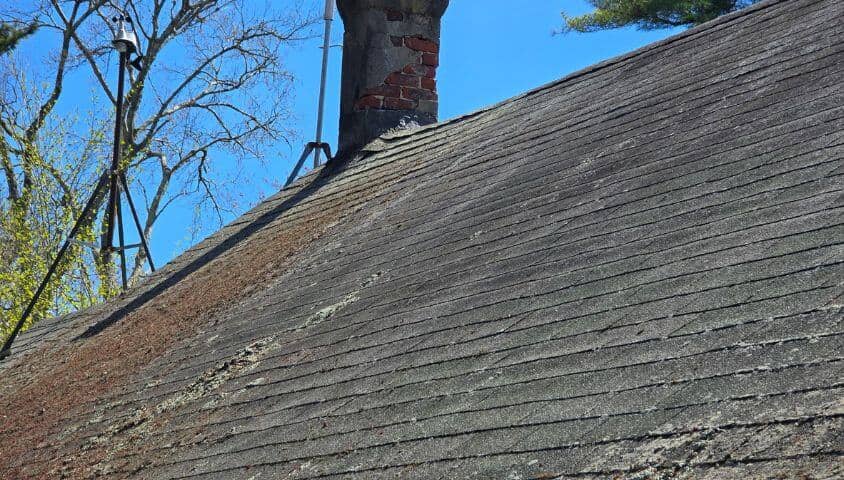
If one wall of your building looks worse than the other three, the reason is usually how long that wall stays wet. Organic growth needs moisture, and it only grows while the surface is damp. North-facing and shaded surfaces stay damp the longest, so they grow first, they grow fastest, and they come back soonest after a wash.
The mechanism is worth understanding, because it changes how you schedule the work on a house and across a portfolio.
How long the surface stays wet
The clearest explanation of this comes from the U.S. Forest Service, writing about lichens: “When lichens are wet, they ‘turn on’ and start photosynthesizing and growing. When lichens are dry, they ‘turn off’, become brittle and go dormant.”
Algae, mildew, moss, and lichen all work on that same clock. Every hour a surface holds moisture is an hour of growth, and every hour of direct sun is an hour of dormancy. Two walls on the same building, same paint, same age, same rainfall, will look completely different after 3 years if one dries by 9 a.m. and the other stays damp until noon.
Sunlight controls that clock, and Oregon State University Extension puts it plainly in its guidance on roof moss: “moss also depends on shade to thrive,” and its plant pathology specialist is blunt about the durable fix: “You’ve got to let the sun in or it will return.”
Why north is usually the elevation that loses
In the northern hemisphere the sun tracks across the southern sky, which is why the Department of Energy’s passive solar guidance tells builders that windows “should face within 30 degrees of true south” and that good design harnesses “the sun’s low rays in winter.” The consequence for maintenance gets discussed less often: the north elevation gets little direct sun in summer and effectively none in winter, when the sun sits lowest and the days are shortest.
So overnight dew and condensation burn off the south wall in an hour and sit on the north wall half the day. In December they may not fully dry at all.
Orientation is only the default answer, though. The real question is which surface dries last, and plenty of things cast shade besides the compass: tree canopy, an adjacent building, a parapet, a covered walkway, a stair tower recess, a north-slope roof plane, the lower levels of a parking structure. A south-facing wall behind a dense oak behaves like a north wall.
What is actually growing there
Naming it matters, because each one responds differently.
- Algae is the dark streaking on roofs. The Asphalt Roofing Manufacturers Association identifies the usual culprit: “Gloeocapsa magma is probably the most prevalent of several algae species that contribute to discoloration,” and notes it’s most visible on light-colored roofs and most common in warm, humid conditions.
- Mildew and mold show up as a gray to black film on siding, soffits, and fences.
- Moss is the green mat, and it’s the one that does mechanical damage. Oregon State notes moss “traps soil and debris, holding moisture and extending the time wood roofs remain wet,” and that on asphalt and metal it “can lift shingles and allow water to penetrate.”
- Lichen is the crusty gray-green patch. It bonds to the surface and is the hardest of the four to remove.
The moss description contains a loop: the growth holds water, which keeps the surface wet, which grows more moss. So a shaded elevation gets worse faster than a linear rate would predict, which is what makes an every-few-years approach fail on exactly the walls that need the most attention.
For homeowners: the one wall that looks wrong
You wash the house, everything looks even, and 18 months later the north wall and the shaded side of the roof have come back while the rest still looks fine. Those two elevations are separate microclimates, and they were never going to age at the same rate.
Two things help. Cleaning is maintenance, and the north side of a house in a humid market may simply need it on a shorter cycle than the south side. And where you can safely open up airflow and sunlight by trimming back the canopy, you slow the regrowth instead of just resetting it.
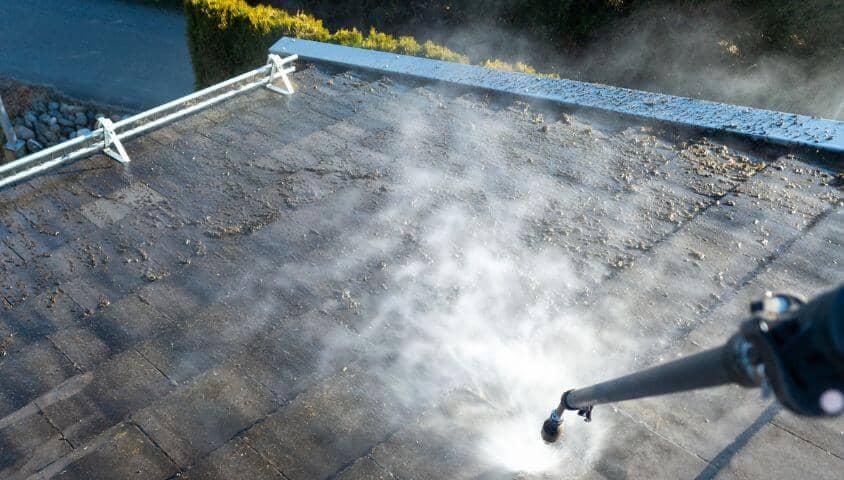
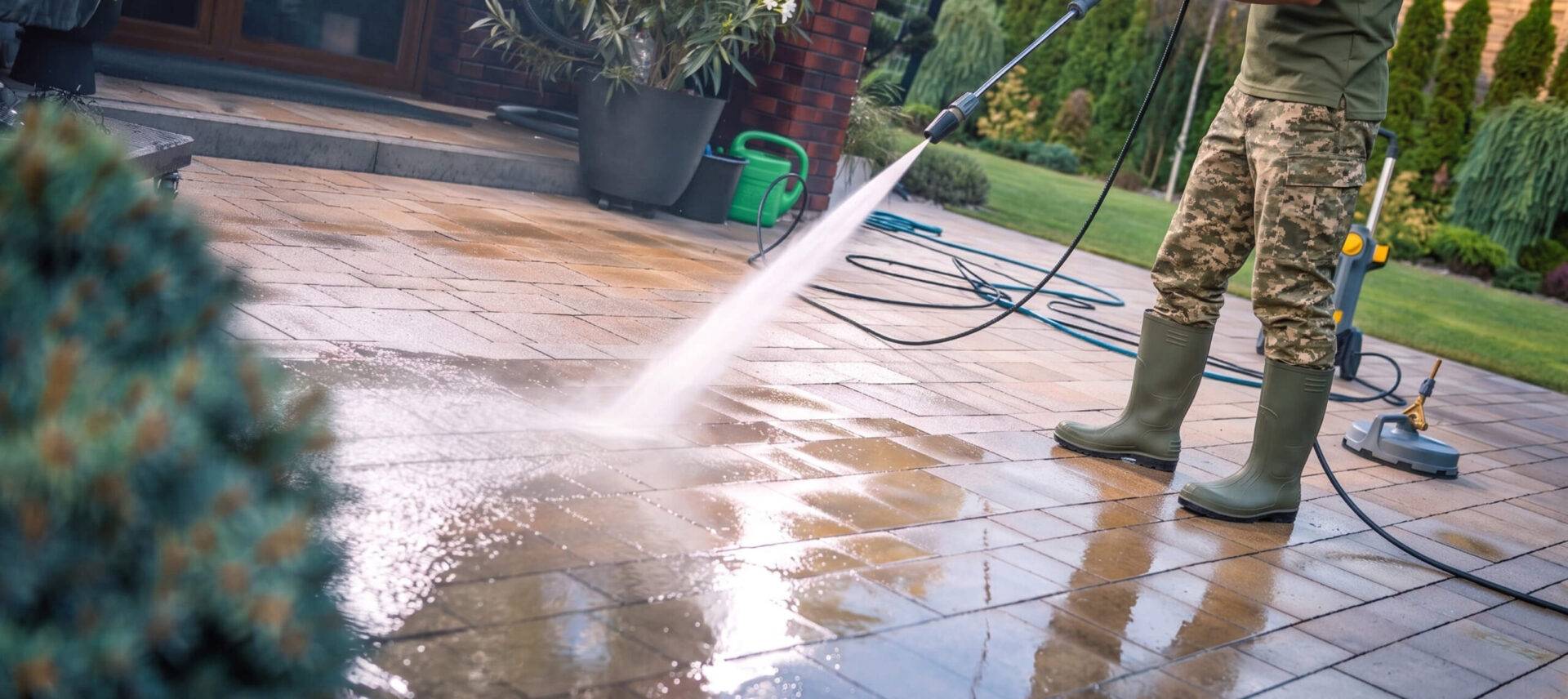
What not to do is chase shaded growth with more pressure. Roofs, painted siding, and stucco need a soft wash, which uses low pressure and a detergent that kills the growth at the root rather than knocking the top layer off. Our companion piece on soft washing versus pressure washing versus power washing covers which method each surface needs.
For commercial properties: it presents as one elevation failing early
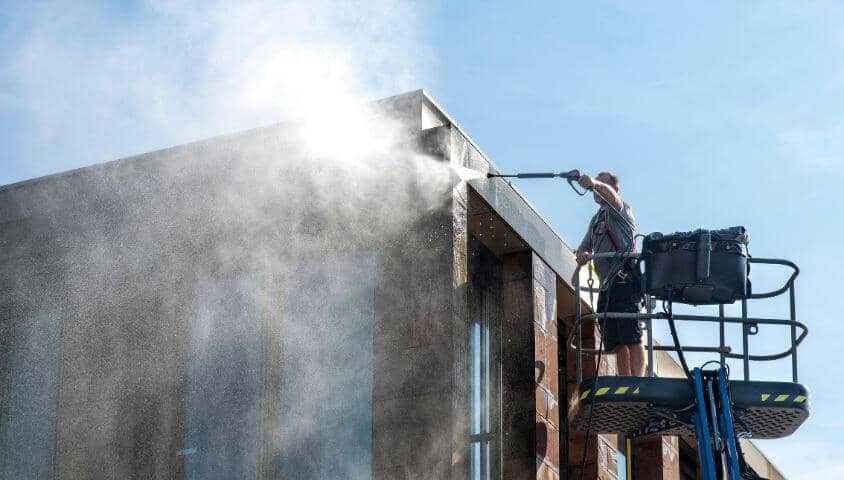
On a portfolio this shows up as an appearance problem with a pattern. The north elevation of every building in the community looks worse than the other three, so complaints cluster and a board concludes one building was skipped. In HOA-heavy markets that pattern drives most of the volume.
It also concentrates on the places people walk. Shaded entries, breezeways, stair towers, north-side walkways, and lower parking levels are the surfaces that stay damp, which makes them both the growth problem and the slip problem at the same time.
Retained moisture also degrades paint, sealant, and masonry, which is why the EPA’s moisture control guidance is written for building operators and maintainers as well as designers. Managing water on a building is an ongoing maintenance function, not only a design decision.
The federal specification for cleaning historic masonry, including biological growth, requires that the “lowest possible pressure will be used to achieve desired results,” with rinse pressure “not to exceed 400 psi.” Anyone proposing to clean brick, formstone, or a historic facade with high pressure is proposing damage. This matters in older mid-Atlantic markets with real historic districts.
The practical move is to budget by exposure rather than by building. Inspect each elevation separately, put the shaded and north-facing surfaces on a shorter cycle than the sunny ones, and phase the work across the year instead of treating the whole property once and watching a third of it fail early.
The dry-climate version of the same question
In arid markets the algae and moss story mostly doesn’t apply. There isn’t enough humidity to support it, and the Forest Service point explains why: without water in the air, the growth stays dormant.
Shade still matters, but the mechanism changes. Shaded areas hold snowmelt and irrigation overspray longer, so moss appears only in the narrow spots that stay reliably damp, usually a north wall within reach of a sprinkler. Mostly what accumulates in shade is what never gets rinsed or baked off: winter road salt and sand, construction dust, and hard-water mineral staining where sprinkler spray lands and evaporates.
The question to ask is the same one in either climate: where does water sit longest on this property?
How we approach it
We read the building before we clean it: which elevations are shaded, what’s actually growing on each, and what the surface can safely take. Growth gets soft washed so it’s killed rather than displaced, which is what makes the clean hold. Then we recommend a cycle by elevation, because the north side and the south side aren’t the same job and pretending otherwise is how properties end up looking patchy.
Find a PROP WASH® near you
PROP WASH® is veteran-founded and a proud member of the Veteran Service Brands network. Every location is locally owned and operated, backed by a 100% satisfaction guarantee, and quotes within 24 hours. Find a PROP WASH® near you and get a free estimate for your home or your property.